

Thinking about adding a kitchen skylight to your home? Winter on the Sunshine Coast is a great time to get it done. The weather is drier, tradespeople are easier to book, and the shorter days reveal exactly where your kitchen is missing natural light. Here is everything you need to know before taking the next step.
The Problem With Dark Kitchens
Kitchens are one of the most used rooms in the house. Yet they are often one of the darkest.
Deep benchtops, overhead cabinets, and limited windows all work against natural light. Many Sunshine Coast homeowners end up cooking under artificial lighting every morning and evening, even when the sun is fully up outside. It is one of those things you adapt to over time without realising how much of a difference proper natural light would make.
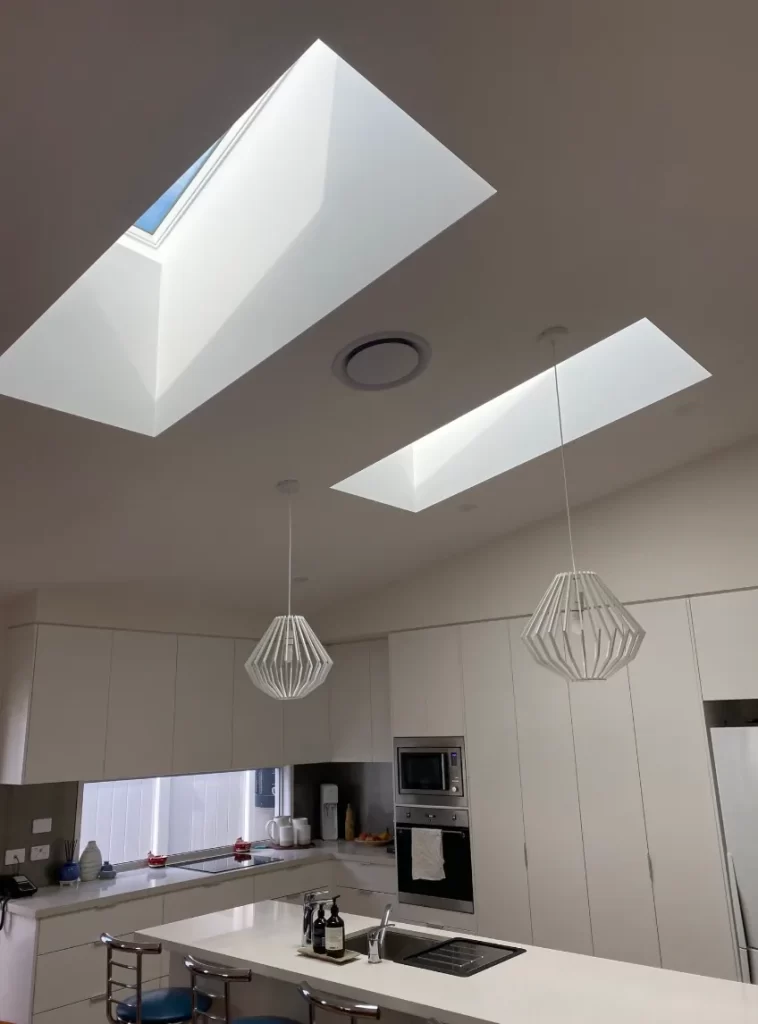
A skylight in the kitchen solves that. Light from above reaches areas that a wall window simply cannot. Colours look truer, surfaces are easier to see, and the whole room feels more open and less enclosed.
According to YourHome, the Australian Government’s guide to sustainable housing, a skylight can admit more than three times as much light as a vertical window of the same size. That is a significant return from a single installation, particularly in a kitchen where bench space and cabinetry leave little room for conventional windows.
The benefits go well beyond how the space looks. Researchers at Monash University’s Turner Institute for Brain and Mental Health led one of the largest studies ever conducted on light and mental health. Published in the journal Nature Mental Health, it found that people exposed to higher levels of daytime light reduced their risk of depression by 20 per cent. A separate Australian study, the Australian Genetics of Depression Study led by researchers at the University of Sydney and the University of Queensland, examined over 13,000 adults and found that more hours of daylight were directly linked to lower depressive symptoms and better sleep quality.
For a room where most households start their day, prepare meals, and spend time together, improving natural light is a meaningful investment in daily health and well-being. Not just a cosmetic upgrade.
Why Winter Is the Right Time to Act
1. The Sunshine Coast Is Still Bright in Winter
The Sunshine Coast has a mild, humid subtropical climate. Winters run from June to August and are far drier than summer. According to regional climate data, average winter rainfall drops to around 40 mm per month, compared to over 300 mm during the summer wet season. That settled, dry weather creates ideal conditions for a skylight installation. Fewer weather delays, cleaner roofing conditions, and more predictable scheduling for both homeowners and installers.
The lower sun angle in winter also works in your favour. YourHome.gov.au notes that north-facing skylights perform well in Australian conditions by capturing low-angle winter sun while avoiding the intense overhead heat of summer. If your kitchen faces north, winter is exactly the right time to see how that light can work for you.
2. Winter Reveals Where Your Kitchen Needs Light
In summer, light floods in from multiple directions. Doors are open, the days are long, and it is easy to miss a dim corner or a poorly lit work surface.
Winter is more honest. The shorter days and lower light levels reveal which parts of your kitchen feel flat and inadequate by mid-afternoon. That gives you a clear, practical picture of where a skylight will make the biggest difference before you commit to any product or placement.
3. Booking Is Easier in the Off-Season
Summer and spring are the busiest periods for home improvement work on the Sunshine Coast. Tradespeople’s schedules fill up quickly, lead times stretch, and the process from quote to installation can feel rushed. Booking a skylight installation in winter typically means better availability, more time to ask questions, and a more considered outcome.
4. You Will Be Ready Before the Warmer Months
There is a practical satisfaction in having the work completed before the days get longer. By the time spring arrives, your kitchen will already be transformed. You will have had several weeks to enjoy the improvement before the summer heat sets in, rather than scrambling to book a tradesperson during the busiest period of the year.
The Energy Efficiency Case for Kitchen Skylights
Natural light is not just good for your mood. It can meaningfully reduce the energy your household uses every day.
The YourHome guide to skylights explains that well-placed skylights can ensure spaces are predominantly lit by natural light, with little or no artificial lighting required during daylight hours. In a kitchen that currently relies on downlights or overhead fittings throughout the day, this represents a genuine reduction in electricity use over time.
For Queensland homes specifically, product choice matters when it comes to heat management. In a subtropical climate, skylights with appropriate glazing options help balance light and thermal performance. The Australian Government’s Window Energy Rating Scheme (WERS) rates skylight products for both heating and cooling performance, so homeowners can make an informed choice about which product suits their climate zone. Suncoast Skylights can advise on the most suitable product for your home during a free consultation.
Ventilation is another consideration worth raising in the kitchen context. A kitchen produces more steam, heat, and cooking fumes than almost any other room in the house. Certain skylight options and complementary products, such as the solar roof ventilator from Suncoast Skylights, can help manage heat and improve airflow, reducing your reliance on exhaust fans and air conditioning.

Which Skylight Suits a Kitchen?
The right product depends on your roof type, ceiling layout, and the amount of light you want to let in. Suncoast Skylights offers two main options, and both are worth understanding before you commit.
Traditional Skylights
Traditional skylights are installed directly through the roof. They create a physical opening that channels real sunlight into the room below. They work well in kitchens with a clear, unobstructed path from the roof to the ceiling. Suncoast Skylights offers a range of sizes and finishes to suit different roof types and interior styles. They also handle repairs and replacements for existing skylights, making them a practical single point of contact for both new installations and maintenance.
For kitchens where ventilation is a priority alongside light, asking about vented skylight options is worthwhile. YourHome.gov.au notes that ventilating skylights releases the hot air that naturally accumulates near the ceiling, which is particularly relevant in a kitchen environment.
Illume Skylight Alternatives
Not every kitchen can have a traditional skylight. If your kitchen sits beneath a second storey or a ceiling cavity, there is no clear roof-to-ceiling path for a conventional installation. That is where an Illume skylight becomes a practical solution.
The Illume system is a solar-powered alternative that replicates the quality and appearance of natural daylight without any roof penetration. Because there is no opening cut into the roof, there is no risk of leaks or heat transfer from the roof cavity into the room below. The light level can be dimmed to suit different times of day, and where needed, it can be wired for use after dark as well.
For households wanting to light more than one area from a single installation, the Illume Multi System allows multiple light panels to run from one rooftop solar panel. For open-plan kitchen and dining areas, this is a cost-effective and visually cohesive option. It is also well-suited to multi-storey homes where traditional skylights are not feasible on lower levels.
The Suncoast Skylights team has been installing both product types across the Sunshine Coast for over 25 years. They can help you identify which solution is appropriate for your kitchen’s specific layout and roof configuration.
A Few Practical Things to Think About Before You Install
Understanding the basics before you meet with an installer means you can ask better questions and get a more useful recommendation.
Roof orientation: YourHome.gov.au advises that north-facing skylights deliver the most consistent natural light in Australian conditions, particularly in winter when the sun sits lower in the sky. East-facing positions provide stronger morning light, while west-facing positions lean toward afternoon. If your kitchen roof faces north, you are well placed for a strong year-round result. Your Suncoast Skylights installer can advise on the best placement for your specific layout.
Sizing: YourHome.gov.au recommends being conservative when sizing skylights, noting that quite small skylights can deliver a significant amount of light. Getting the sizing right is something an experienced installer can guide you on during your quote, based on the size of your kitchen and the amount of ambient light it currently receives.
Ventilation needs: In a kitchen, steam and cooking fumes accumulate quickly. If adequate ventilation is a priority for your household, it is worth raising this early in the conversation with your installer. Suncoast Skylights offers solar roof ventilators as a complementary product that can work alongside a skylight installation to improve airflow and reduce heat build-up.
Council approval: Most residential skylight installations on the Sunshine Coast do not require council approval. There can be exceptions depending on your property type, roof structure, or whether your home is in a specific zone. The Suncoast Skylights team can advise you on this during your free quote.
Accessories:. If you are interested in greater control over the light level in your kitchen, Suncoast Skylights also offers illume accessories, including a remote dimming switch kit, which lets you adjust the brightness easily without the need for an electrician.
Getting Started With Suncoast Skylights
Suncoast Skylights has over 25 years of experience in the skylight industry. They supply and install traditional skylights and Illume alternatives across the Sunshine Coast for homes and commercial spaces. All quotes are free with no obligation, and their team will assess your kitchen, walk you through the options that suit your home, and give you honest advice rather than a one-size-fits-all recommendation.
Winter is a practical window to get this done. The weather is on your side, the booking process is smoother, and your kitchen will be brighter well before summer arrives.
Get in touch with Suncoast Skylights to book your free quote today.
Frequently Asked Questions
Is winter a practical time to install a skylight on the Sunshine Coast?
Yes. Sunshine Coast winters are mild and much drier than summer, with average July rainfall sitting at around 27 mm. That means fewer weather-related delays and more predictable scheduling. Tradespeople are also easier to book during this quieter period, so you are likely to get a faster turnaround from quote to installation.
Will a kitchen skylight make the room hotter in summer?
This depends on the product and its placement. Traditional skylights installed with appropriate glazing options are designed to manage heat transfer. Illume skylight alternatives do not penetrate the roof at all, which eliminates heat fluctuation issues associated with older-style skylights. The Australian Government’s Window Energy Rating Scheme (WERS) provides independent performance ratings for skylight products, and your Suncoast Skylights installer can recommend the right option for the Sunshine Coast’s subtropical climate.
How long does a skylight installation take?
Most residential installations are completed within a day. This can vary depending on the product type, your roof structure, and whether any ceiling work is involved. Your installer will confirm the timeframe during the quote stage.
Do I need council approval to install a kitchen skylight in Queensland?
Most residential installations on the Sunshine Coast do not require council approval. There can be exceptions depending on the property type and the scope of work. Suncoast Skylights will advise you on this during your free consultation.
What is the difference between a traditional skylight and an Illume skylight?
A traditional skylight is installed through the roof and channels real sunlight directly into the room. An Illume skylight is a solar-powered system that simulates natural daylight without any roof penetration. Illume is well-suited to kitchens beneath a second storey or ceiling cavity where a traditional skylight is not practical.
Can I control the brightness of my kitchen skylight?
Yes, if you opt for an Illume system. Suncoast Skylights offers a remote dimming switch kit that allows you to adjust the light level without needing an electrician. It is a practical option for kitchens where you want different light levels throughout the day.
How do I know which skylight is right for my kitchen?
The best way is to have a consultant assess your space in person. Suncoast Skylights offers free, no-obligation quotes and will give you a clear recommendation based on your kitchen’s layout, roof type, ceiling configuration, and lighting goals.