
For homeowners across the Sunshine Coast, mould is not a rare problem. It is a common one. High humidity, warm temperatures, and seasonal rain create ideal conditions for moisture to linger inside roof cavities. Over time, this moisture can turn into mould that spreads above your ceiling.
If you have ever climbed into your roof space on a hot Queensland afternoon, you know the feeling. The air is thick, stale, and heavy with heat and moisture. That trapped environment is not just unpleasant; it is the perfect breeding ground for mould.
A solar-powered roof ventilation system is one of the most effective and practical ways to break this cycle. In this blog, we will explore exactly how it works, why mould thrives in roof spaces, and how solar ventilation helps protect your health and home.
Why Mould Loves Roof Spaces
Mould is a living organism that needs three things to grow: moisture, warmth, and a surface to cling to. Roof spaces provide all three.
Warm air rises through your home during the day. In humid regions like the Sunshine Coast, the air carries moisture. When it reaches the roof cavity, it becomes trapped. At night, temperatures drop and condensation forms on roofing materials and insulation.
According to Queensland Health, mould commonly develops in areas with poor ventilation and high humidity, especially after prolonged damp conditions or repeated condensation events. Roof spaces are a textbook example of this environment.
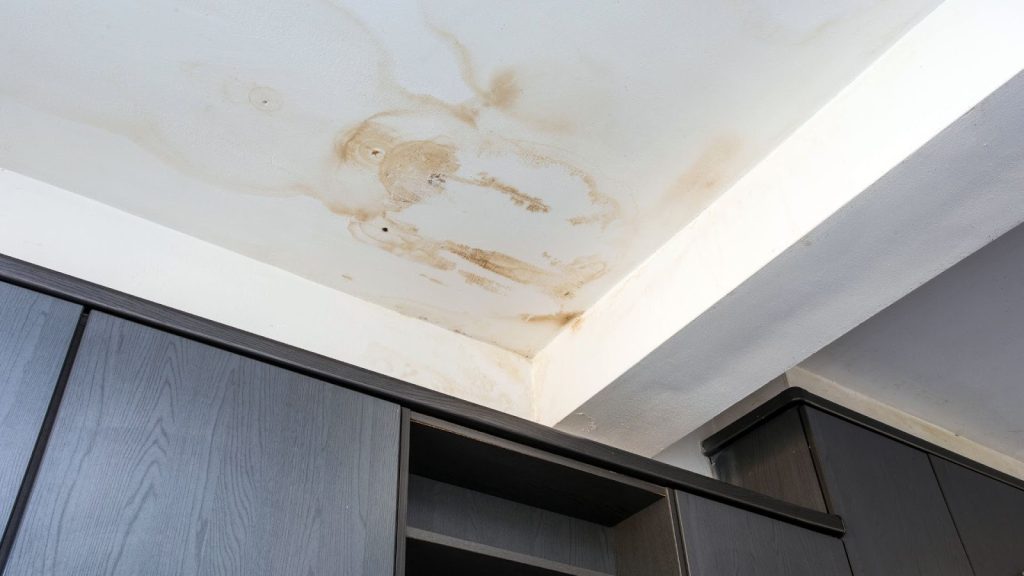
Over time, mould spores settle and multiply. Often, homeowners do not realise what is happening until musty smells appear, allergies worsen, or stains begin to show on ceilings.
The Hidden Risks of Roof Space Mould
Mould is not just a cosmetic issue. It can impact your health and the structure of your home. Mould exposure can cause respiratory irritation, worsen asthma, trigger allergies, and lead to ongoing health issues for vulnerable people.
From a building perspective, mould feeds on organic materials. Timber roof framing, insulation, and dust become food sources for mould. Left untreated, mould can contribute to insulation breakdown and ongoing moisture problems that are costly to fix.
This is where prevention matters more than treatment.
What is a Solar-powered Roof Ventilation System?
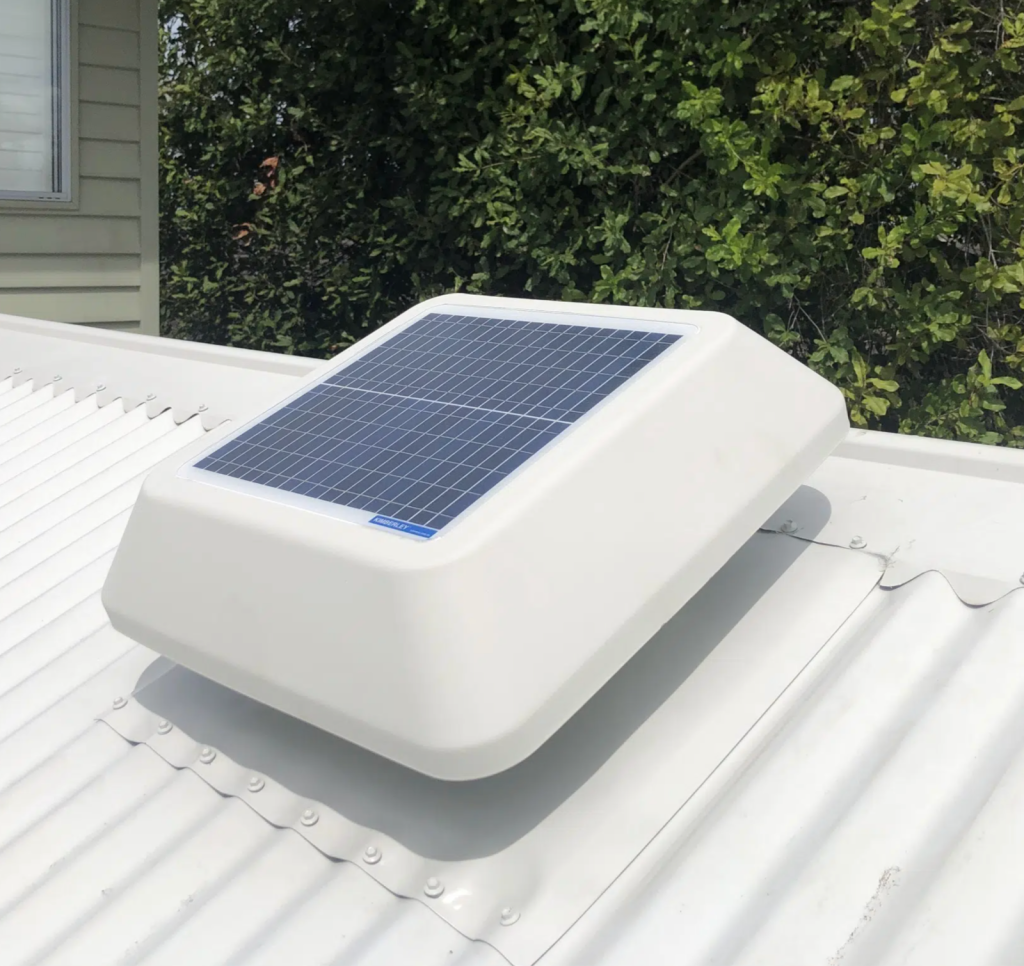
A solar-powered roof ventilation system is designed to remove hot, moist air from your roof cavity using solar energy.
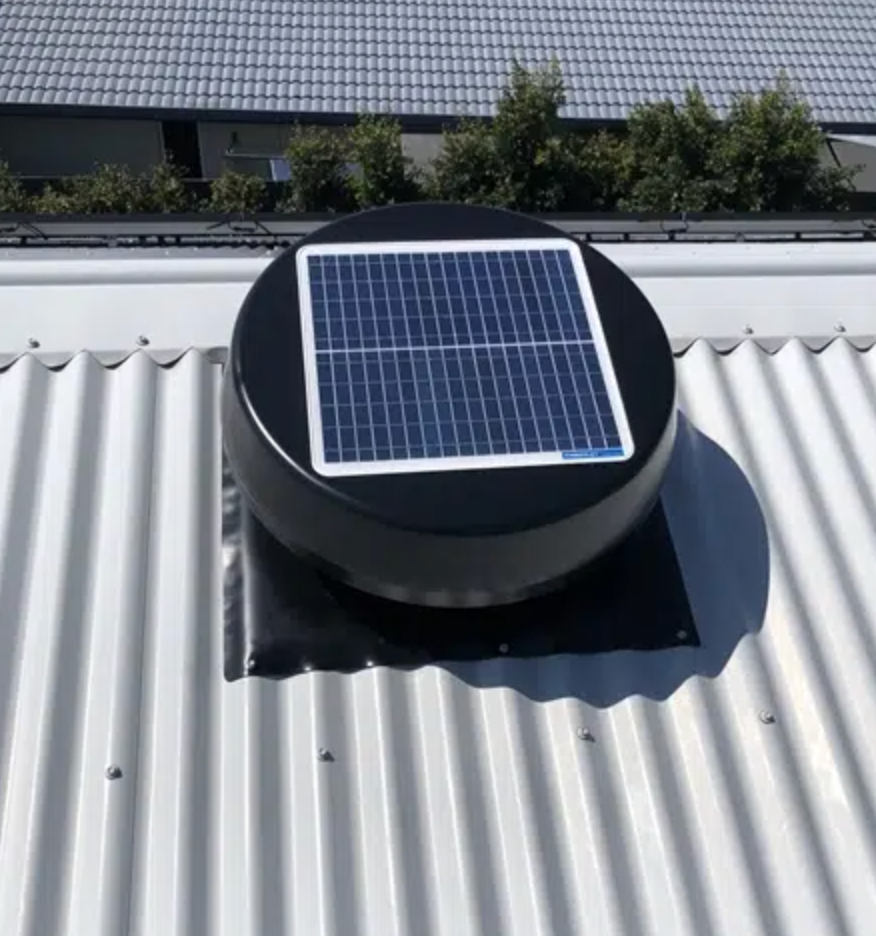
Mounted on your roof, our system uses a solar panel to power a high-efficiency fan. As sunlight hits the panel, the fan activates and begins extracting air from the roof space. Fresh air is then drawn in through existing eaves or vents, creating continuous airflow. There is no wiring. No electricity costs. No complicated controls.
The system works hardest on hot, sunny days, which is precisely when roof spaces experience the most heat and moisture buildup.
How Solar Roof Ventilation Interrupts Mould Growth
Removing trapped moisture before mould can form
Think of your roof cavity like a closed car parked in the sun. Without airflow, moisture builds up quickly. Ventilation is like opening the windows and letting the air move again. By actively extracting damp air, a solar-powered roof ventilation system reduces humidity levels inside the roof space. Without consistent moisture, mould struggles to survive.
Reducing temperature extremes
High temperatures accelerate mould growth. Solar ventilation helps stabilise roof cavity temperatures by expelling superheated air during the day. This temperature reduction limits the warm, humid conditions that mould prefers, creating a less welcoming environment for spores.
Supporting natural drying after rain and humidity
After heavy rain or humid weather, roof spaces can remain damp for days. Solar ventilation speeds up the drying process by continuously exchanging moist air with drier outdoor air. This aligns with Queensland Health guidance, which emphasises drying damp areas quickly as a key strategy in managing mould risk.
How Roof Ventilation Supports Your Whole Home
The benefits of a solar-powered roof ventilation system extend beyond mould prevention.
By reducing roof cavity temperatures, ventilation can help regulate indoor temperatures. This can ease pressure on air conditioning systems and improve comfort during summer. Lower moisture levels also help protect insulation performance. Damp insulation loses effectiveness and can contribute to uneven indoor temperatures.
In this way, roof ventilation supports both health and energy efficiency.
Why Sunshine Coast Homes Benefit The Most
The Sunshine Coast climate is beautiful but challenging for buildings.
Warm temperatures, coastal humidity, and sudden rain events all contribute to moisture entering roof spaces. Without active ventilation, that moisture has nowhere to go. A roof ventilation system for Sunshine Coast homeowners needs to be reliable, low-maintenance, and suited to local conditions. Solar-powered systems meet these requirements without adding energy costs.
Providers like Suncoast Skylights understand these local challenges and design solutions that work with the climate, not against it.
The Long-term Value of Mould Prevention
Preventing mould is far cheaper and less stressful than treating it. Professional mould remediation, insulation replacement, and structural repairs can cost thousands of dollars. Health impacts can be harder to measure, but even more significant.
Installing a solar-powered roof ventilation system is a proactive investment. It protects your roof structure, supports healthier indoor air, and aligns with health advice.
Why Choose Us at Suncoast Skylights?
Our products are designed for Sunshine Coast Conditions. Our systems provide a natural, cost-effective way to improve airflow, protect your roof structure, and create a more comfortable living space year-round.
For homeowners on the Sunshine Coast, where climate and humidity work against building materials, this solution is essential.
If you notice musty smells or condensation, or simply want to protect your home before mould appears, solar roof ventilation is one of the most effective steps you can take.
Sometimes the best solutions are the ones working quietly above your head, keeping your home dry, healthy, and resilient for years to come.